Before the Paper: An Autumn Harvest
This autumn, there is another side of Japanese papermaking worth getting to know.
Alongside the plants that provide its fibres, traditional washi depends on materials that help those fibres become a sheet.
One of them is tororo-aoi.
Its roots supply a viscous liquid known as neri, used in hand papermaking, including in Echizen.
Autumn is the harvest season for these roots.
A cultivation calendar published by Japan’s Agency for Cultural Affairs places harvesting and packing in October, followed by shipping in November.
The exact timing varies between growers.
For those following this cycle, these weeks are the link between months of cultivation and the work of the papermaker.
To prepare neri, the roots are crushed and soaked in water.
The liquid they release is filtered before being added to the papermaking vat.
It helps the fibres disperse instead of gathering into clumps.
It also keeps them suspended in the water for longer.
This gives the maker more control when forming the sheet.
Neri is a papermaking aid, rather than the fibre from which the paper itself is made.
Echizen’s papermaking materials also include kozo, mitsumata and gampi.
Each brings different qualities to the paper.
Kozo has long, strong fibres, while mitsumata fibres are finer and gampi is valued for its lustre.
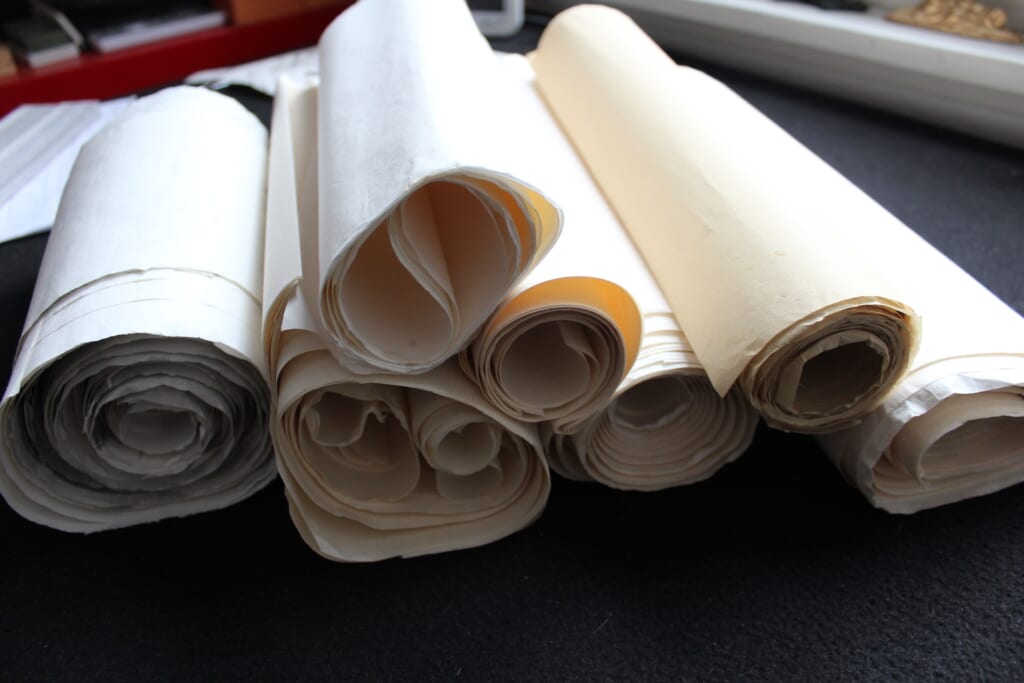
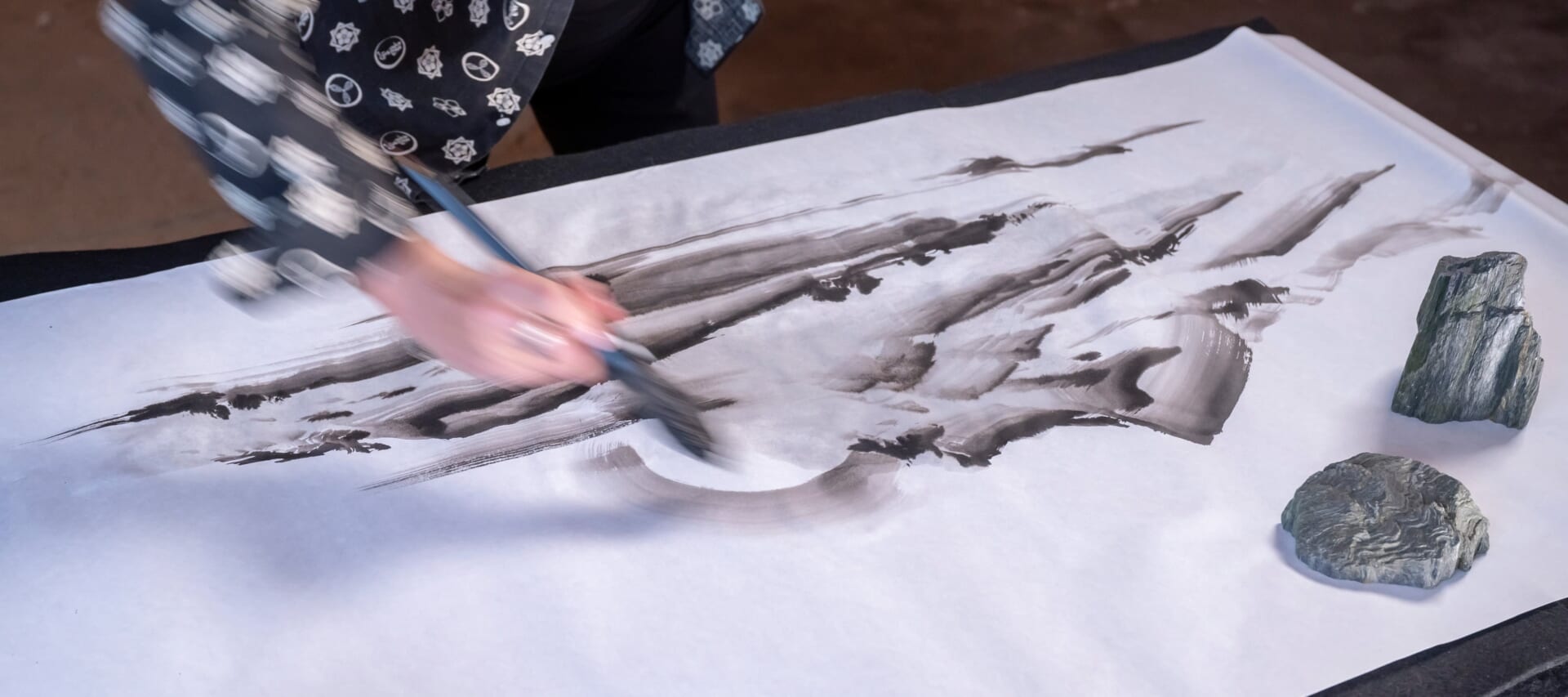
The choice of material is therefore part of the work, well before a sheet reaches our painting table.
During Sumi Journey 2027, we’ll visit Echizen to learn more about how these materials become paper.
When we next paint on washi, we’ll have more than its surface to think about: the plants, the preparation and the hands that made it.
Margot